Mandatory ADA Website Compliance: What Businesses Need to Know
For a long time, many businesses viewed website accessibility as an optional improvement, rather than something essential. Today, it’s not only becoming a basic expectation, it is a legal requirement. Businesses of all sizes are facing growing pressure to make their websites accessible to everyone, particularly those with disabilities. The problem is that many companies still don’t realize their current website may already be out of compliance.
The Americans with Disabilities Act (ADA) website compliance mandate is no longer something businesses can afford to ignore. Between legal risks, changing standards, and the way search engines evaluate user experience, accessibility has become part of maintaining a healthy, modern website.
Mandatory Means Mandatory
A lot of businesses still think ADA compliance is more of a recommendation than a requirement. It’s not. The Americans with Disabilities Act (ADA) was created to ensure equal access, and that increasingly includes digital experiences. If your website prevents users with disabilities from navigating, reading, or interacting with content properly, your business could be exposed to legal issues.
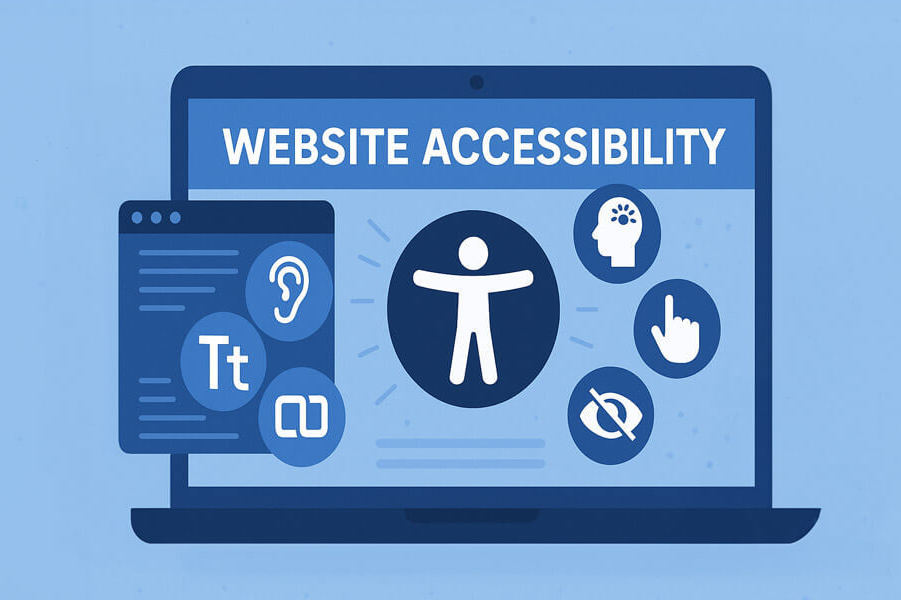
At the center of website accessibility standards is WCAG, or the Web Content Accessibility Guidelines created by the World Wide Web Consortium (W3C). These guidelines establish how websites should function for users with visual, auditory, motor, and cognitive impairments.
In practical terms, that can include:
- readable text contrast;
- keyboard navigation;
- screen reader compatibility;
- image descriptions; and
- accessible forms and menus.
Many businesses assume accessibility only applies to large corporations, but lawsuits have affected companies of all sizes across nearly every industry.
Why Website Accessibility Matters Beyond Compliance
The legal side gets most of the attention, but accessibility has broader benefits that directly impact your business and your customers.
- It Helps Protect Your Business From Website Accessibility Lawsuits
- Google Pays Attention to User Experience, and Ranks Compliant Websites Higher
- It Creates a Better User Experience for Everyone
Website Accessibility Lawsuits: Why Businesses Are Paying Attention
Businesses across nearly every industry have faced legal action over inaccessible websites, and the number of cases continues to grow each year. These lawsuits show that accessibility compliance is no longer something companies can afford to overlook.
- Domino’s Pizza faced a high-profile lawsuit after a visually impaired customer was unable to place an order using screen reader technology. The case gained national attention and ultimately reinforced that websites must be accessible under the ADA. Beyond legal fees, the company also dealt with significant public scrutiny.
- Major brands including Nike, Target, and Burger King have also encountered accessibility-related claims, highlighting that even nationally recognized companies are not immune to compliance issues.
- Smaller businesses are increasingly being targeted as well. Thousands of local and mid-sized companies receive accessibility complaints or lawsuits every year, often leading to costly settlements, legal expenses, and unexpected disruptions to operations.
The takeaway is straightforward: website accessibility is no longer optional. Businesses are expected to provide digital experiences that are accessible to all users, and failing to do so can carry real legal and financial consequences.
Accessibility Is Also a Smart Business Decision
Businesses spend a lot of money driving traffic to their websites. But if visitors struggle to navigate the site or cannot interact with key features, that traffic doesn’t convert the way it should.
A website that works properly for more people naturally creates more opportunities for engagement, inquiries, purchases, and trust. It also signals professionalism. When users land on a website that feels modern, clear, and easy to use, it reflects positively on the business behind it. These are among the reasons why accessibility is becoming less about “checking a box” and more about long-term business strategy.
Don’t Wait Until Accessibility Becomes a Problem
For many businesses, ADA website compliance only becomes a priority after receiving a complaint or legal notice. By then, the stress and cost are much higher than they need to be. Taking a proactive approach protects your business, improves your website, and creates a better experience for your customers from the start.
How River City Marketing Helps
At River City Marketing, we help businesses navigate website accessibility without making the process overwhelming. As an AccessiBe partner, we provide solutions that help websites achieve ADA and WCAG compliance while improving usability across the board. We believe accessibility should be practical, manageable, and part of building a better online experience overall.
If you’re unsure whether your website is compliant or want to learn how AccessiBe can help, River City Marketing is here to guide you through the process. Reach out today and let’s make your website more accessible, more effective, more search engine “friendly”, and better prepared for the future. Learn more about website accessibility on our website.